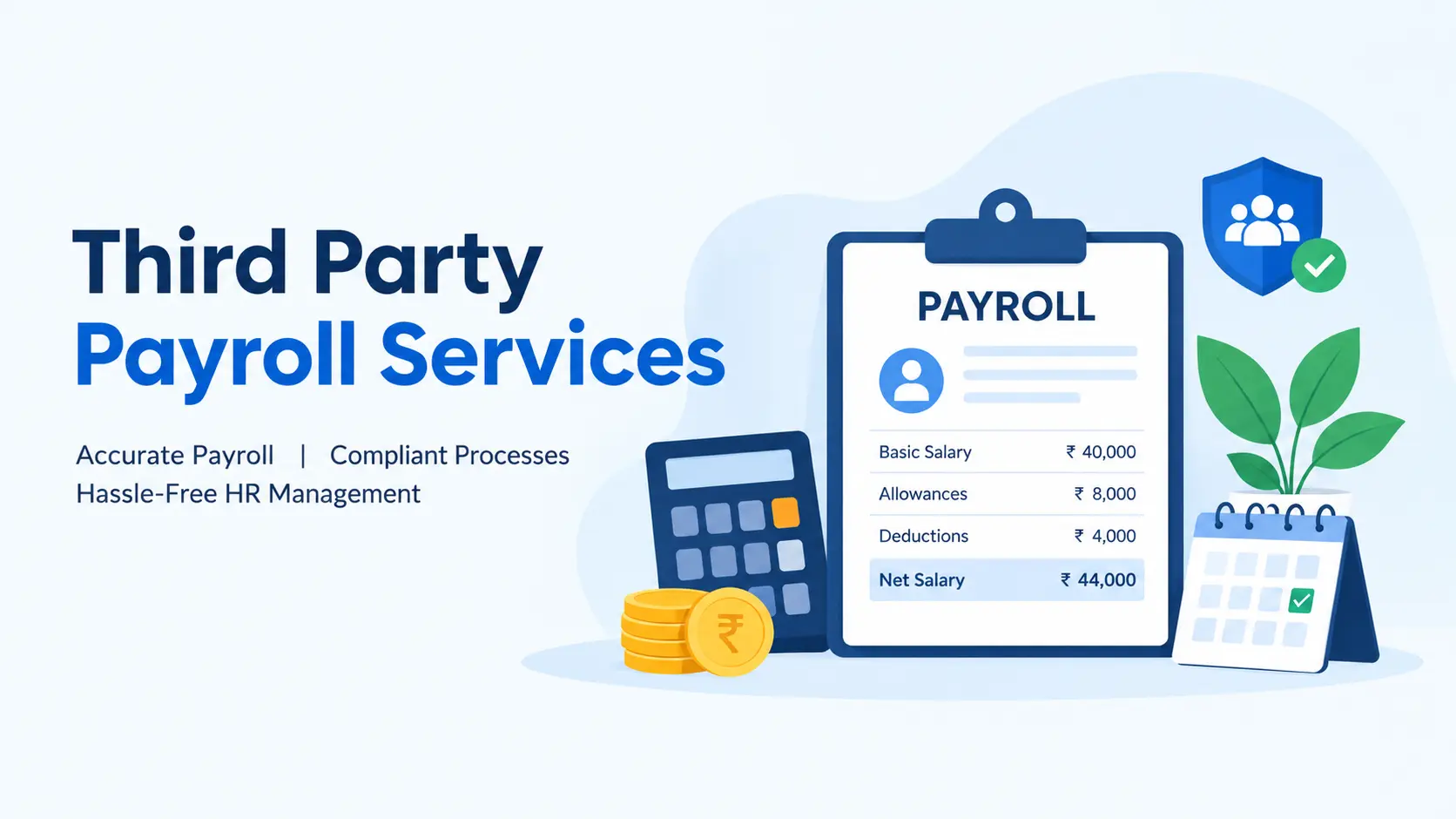
What Are the Benefits of Third Party Payroll Services?
Third Party Payroll Services by Bisani Brothers simplify payroll, reduce administrative workload, support workforce growth, and streamline payroll operations.
Read Article
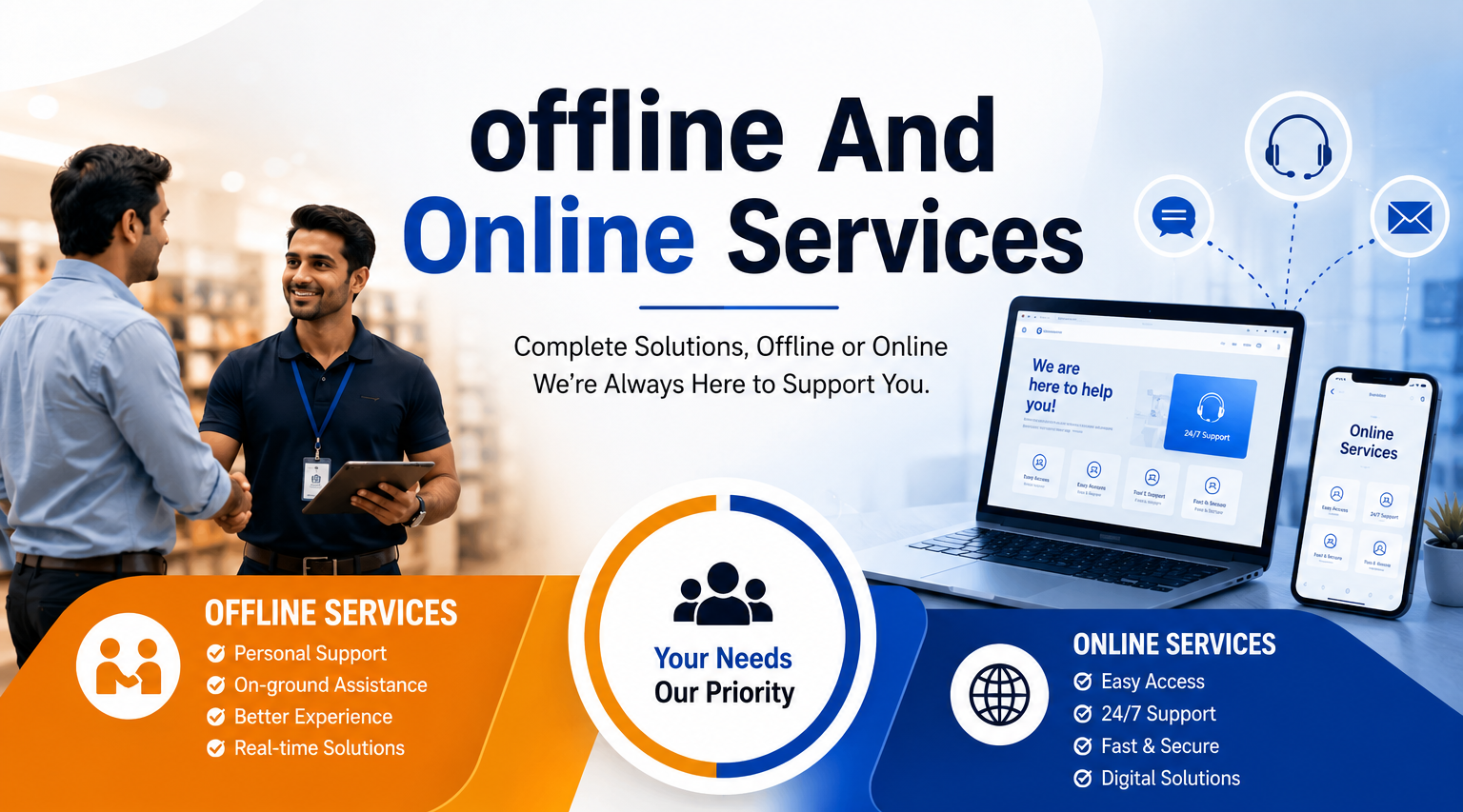
Discover the difference between offline and online services for businesses. Learn how the right offline service provider and digital solutions support business growth.
INTRODUCTION
Bisani Brothers knows that modern business requires the right combination of support services for its proper development and provision of high-quality services to consumers. Nowadays, the choice between offline and online services depends on the business type, target audience, the way of doing business and objectives. Customer acquisition, staff recruitment, field execution, financial services, payroll, and EV services – offline and online services both have a significant part in business development.
The knowledge about the differences between offline and online services is useful for choosing the right business structure and building a better interaction with customers. Regardless of whether you run a startup, a growing company, a retail brand, fintech business or even an enterprise dealing with large teams of people, the knowledge about these two models of services can be helpful.
Offline service delivery is based on physical contact, physical execution, or business assistance physically. Online service delivery is based on digital methods using websites, mobile applications, software, cloud solutions, virtual assistants, and online communication tools.
Both approaches are quite effective, but operate differently.
The definition of offline services can be explained as business services that are delivered via physical presence or physical interactions, on-field work, office visits, branch networking, and personal communication. Such services may be essential if businesses require personal interaction, physical verification, on-ground market presence, product demonstration, retail service, and on-ground staffing.
Examples of offline services include:
In-store customer assistance
Field sales and merchant onboarding
Door-to-door product promotion
BTL ATL field force services
Customer document collection and physical verification
Service and maintenance support at customer or business locations
An offline service provider is especially valuable for industries such as retail, fintech, banking, insurance, logistics, telecom, consumer goods, and electric vehicle operations where human interaction and field execution directly affect business results.
Online services refer to business services which are offered using digital means such as platforms, software, digital communication, websites, mobile apps and workflow automation. The aim of offering online services is to ensure quickness, convenience, wider outreach, remote access and data management.
Examples of online services include:
Customer support through chat, email, or CRM tools
Online onboarding and digital verification
Virtual consultations and service requests
Payroll software and digital attendance systems
Online lead management and reporting dashboards
Remote staffing coordination and recruitment support
Financial service applications and digital payment processing
Cloud-based team management tools
Online B2B and B2C services platforms
EV charging support platforms and digital service scheduling
In case your business wants to scale quicker and save on paperwork and also be able to run operations from different locations, online services are the best choice.
Modern businesses function in an era where offline as well as online services are vital for growth. Although digitization has compelled businesses to consider adopting online services, offline services have remained valuable in terms of personal communication and interaction. Knowing the critical difference between offline and online services for businesses allows organizations to adopt the correct approach depending on their needs and audience.
Bisani Brothers is a company located in Lucknow which assists businesses to enhance their presence in the market by providing them the necessary field execution and business solutions. We have extensive experience in sales support, staffing, fintech, and market research which allow businesses to use both offline and online services.
Bisani Brothers offers you professional solutions for customer interactions to enable your business to develop strong relations with your customers, enhance their satisfaction level, and retain them for a long time. Trained and skilled staff members conduct communications on behalf of our clients with precision and a customer-centric approach. Located in Lucknow, India, we help businesses from diverse fields.
Let Bisani Brothers expand the horizons of your business operations in Lucknow. Bisani Brothers assists you in reaching out to the right customers with the help of sales assistance, market expansion, manpower, and execution based on solid data. Our professional team concentrates on creating more visibility for your brand, providing quality business opportunities, and growing your business.
The importance of understanding the cost of operations lies in achieving efficiency and profitability within a company. The Bisani Brothers, located in Lucknow, can assist companies in making their operations more efficient and profitable through proper planning and use of resources.
Marketing Strategies assist in reaching the right target audience through various marketing methods. Whether it is digital marketing, social media marketing, field marketing, email marketing, or even branding efforts, the use of proper marketing techniques will ensure increased customer involvement and growth. A good marketing strategy can ensure greater visibility, generation of quality leads, creating strong customer relationships, and ultimately growth.
Customer trust at Bisani Brothers is earned by way of transparency, reliability, and quality in service delivery. Bisani Brothers has been established in Lucknow and is committed to providing reliable solutions in the areas of sales, staffing, fintech, and market research which would establish lasting business relationships.
Fast and reliable Speed of Service is provided through the expertise of skilled teams and effective processes and solutions by Bisani Brothers. We operate from Lucknow and assist our business partners in getting quick execution and better customer support and operational efficiency.
Offline services offer a personalized and trustworthy way through which business organizations can develop a strong bond with their customers. They enable face-to-face communications, which promote the establishment of trust and a better service experience for customers. In addition to that, offline services facilitate local engagement and an effective way of reaching out to the market. If applied correctly, offline services can enable business organizations to grow in a sustainable manner.
Offline services continue to play a significant role in industries that require human interaction.
Benefits include:
Strong customer relationships
Better understanding of customer needs
Personalized consultation
Improved trust
Immediate problem-solving
Professional demonstrations
Local market expertise
Many industries such as finance, healthcare, staffing, and field marketing still depend heavily on offline services.
Online services offer an easy, quick, and accessible means of doing things for both companies and consumers. They ensure that time is saved, operating expenses are cut, and access is possible irrespective of one's location. Through online services, communication, transactions, and services management become easier. Companies get a chance to connect to many people easily, and operations are streamlined. In Lucknow, online services are aiding firms to embrace better practices and grow sustainably.
Digital transformation has made online services an essential part of every business.
Major benefits include:
Wider customer reach
Lower operational costs
Faster communication
Easy information sharing
Improved customer convenience
24/7 availability
Better automation
Increased business scalability
Businesses can manage thousands of customer interactions simultaneously through digital platforms.
Businesses require a balanced approach nowadays to achieve their goals by integrating both offline and online service delivery methods. Offline services ensure that businesses form personal relationships and trust with their clients. On the other hand, online services help businesses reach more people quickly. This combination helps businesses benefit from both approaches in terms of growing and getting new opportunities in their environments.
Businesses that combine both methods can:
Improve customer satisfaction
Increase sales opportunities
Build stronger relationships
Enhance brand credibility
Offer multiple communication channels
Improve customer retention
A hybrid approach allows businesses to meet customer expectations regardless of their preferred communication method.
Selecting the correct Offline Service Provider enables companies to get better performance in terms of field activities, customer interaction, and markets. A dependable service provider will provide skilled staff members, appropriate implementation methodologies, and effective reporting that can assist a company in growing. Experience, level of service, skills of staff members, and industry expertise are some factors that companies need to consider while selecting an offline service provider. In Lucknow, businesses can gain the advantage of such services.
The offline and online services offered by the company are utilized by businesses operating in different sectors for enhancing customer engagement, market coverage, and operational efficiency. The industries that can make use of offline and online combination include retail industry, financial technology sector, healthcare industry, educational institutions, real estate companies, logistics, and eCommerce businesses. The integration of both offline and online channels will help the business reach its customers using both offline and online channels, thus providing better service delivery and business growth.
The combination of offline and online services helps businesses in creating a seamless and stable experience for customers. Offline services help create trust through face-to-face interaction, while online services help in bringing convenience and fast access and communication. The integration of both services can help in improving the customer experience in a business in terms of helping them communicate and make purchases more quickly and easily.
The future of offline and online services is going to be the result of combining the benefits of technology and personalized interaction. Companies nowadays implement hybrid services that allow integrating the elements of face-to-face interaction with online technologies to increase customer engagement and make the process more efficient and convenient. Various technologies like artificial intelligence, cloud services, real-time analytics help in providing the services to customers, and offline support helps in building trust and relationships with them
There is no single answer because the better option depends on the business model, target market, customer expectations, and operational needs.
Local market penetration
Face-to-face customer interaction
Merchant onboarding or field verification
Retail presence and brand activation
Field sales and service execution
Physical workforce deployment
Faster communication and service requests
Remote accessibility
Centralized reporting
Digital workflow management
Lower dependency on physical branches
Better data tracking and automation
A company may use offline teams for field execution, customer acquisition, service support, and market activation, while using online systems for payroll, attendance, CRM, reporting, communication, and performance management.
The Bisani Brothers believe that the key to being successful in any organization is to pick the correct mix of offline and online services. It is important to note that offline services are significant in building relationships while online services ensure convenience, fast service delivery and accessibility. Businesses should not see these as competitors but combine them for maximum success.
If you are looking for offline services or need offline and online services, then you will find it useful to develop a strategy that will enable you to be competitive and efficient in Lucknow and beyond.
Third Party Payroll Services by Bisani Brothers simplify payroll, reduce administrative workload, support workforce growth, and streamline payroll operations.
Read Article
Get reliable Sales And Service Support to improve customer experience, strengthen sales operations, streamline processes, and achieve business growth.
Read Article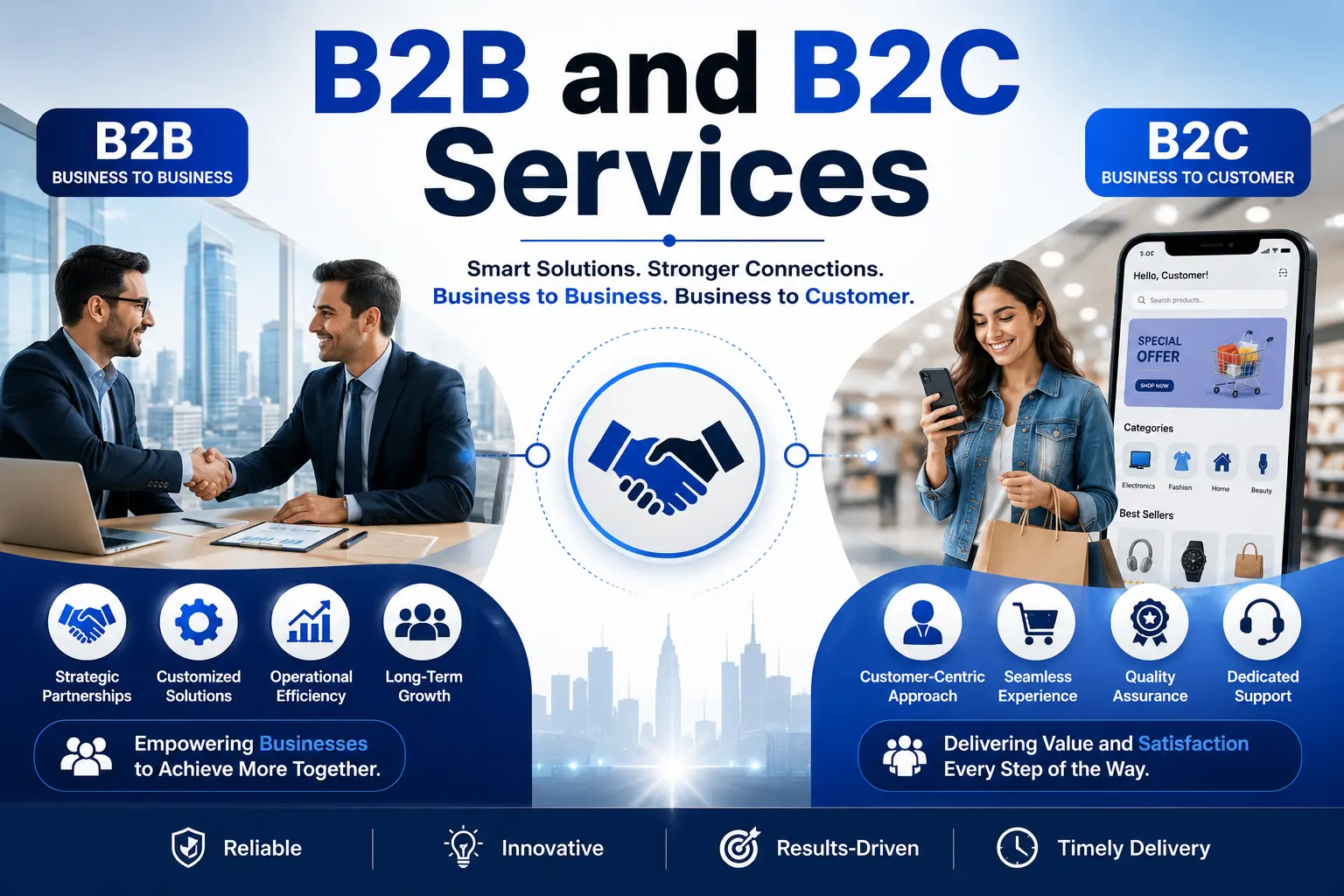
Enhance business growth with B2B and B2C Services from Bisani Brothers. Improve marketing, increase sales, generate leads, and expand your customer reach.
Read ArticleA registered pan-India offline service provider with a measurable on-ground track record
Articles published by the Bisani Brothers Editorial Team draw on 10+ years of field execution experience across staffing, sales, BTL activations, and financial services support — practical guidance for businesses scaling in India.
10+ years of field execution across FinTech, BFSI, retail, and allied sectors. 150+ client engagements, 400,000+ retail outlets mapped, and 2,100+ professionals deployed nationwide — with outcomes you can review through case studies and structured MIS reporting.
Our teams deliver Sales And Service Support, Staffing Services, Feet on Street Services, Gig Services, Third Party Payroll Services, BTL ATL Field Force Services, Brand Promotion Activity, B2B and B2C Services, EV Support Services, Verification Services, and Financial Services Provider support — as integrated offline and online services.
Bisani Brothers Private Limited is headquartered in Lucknow with operations in Mumbai and Gurugram. Founded by Mr. Ashish Bisani, we work as an extension of client sales and operations teams with documented processes, compliance-led execution, and transparent reporting.
Registered company identity, published privacy and terms policies, verified contact channels (+91-522-4530208, contact@bisanibrother.com), and ethical field protocols support confident, long-term partnerships.